Physical Address
304 North Cardinal St.
Dorchester Center, MA 02124
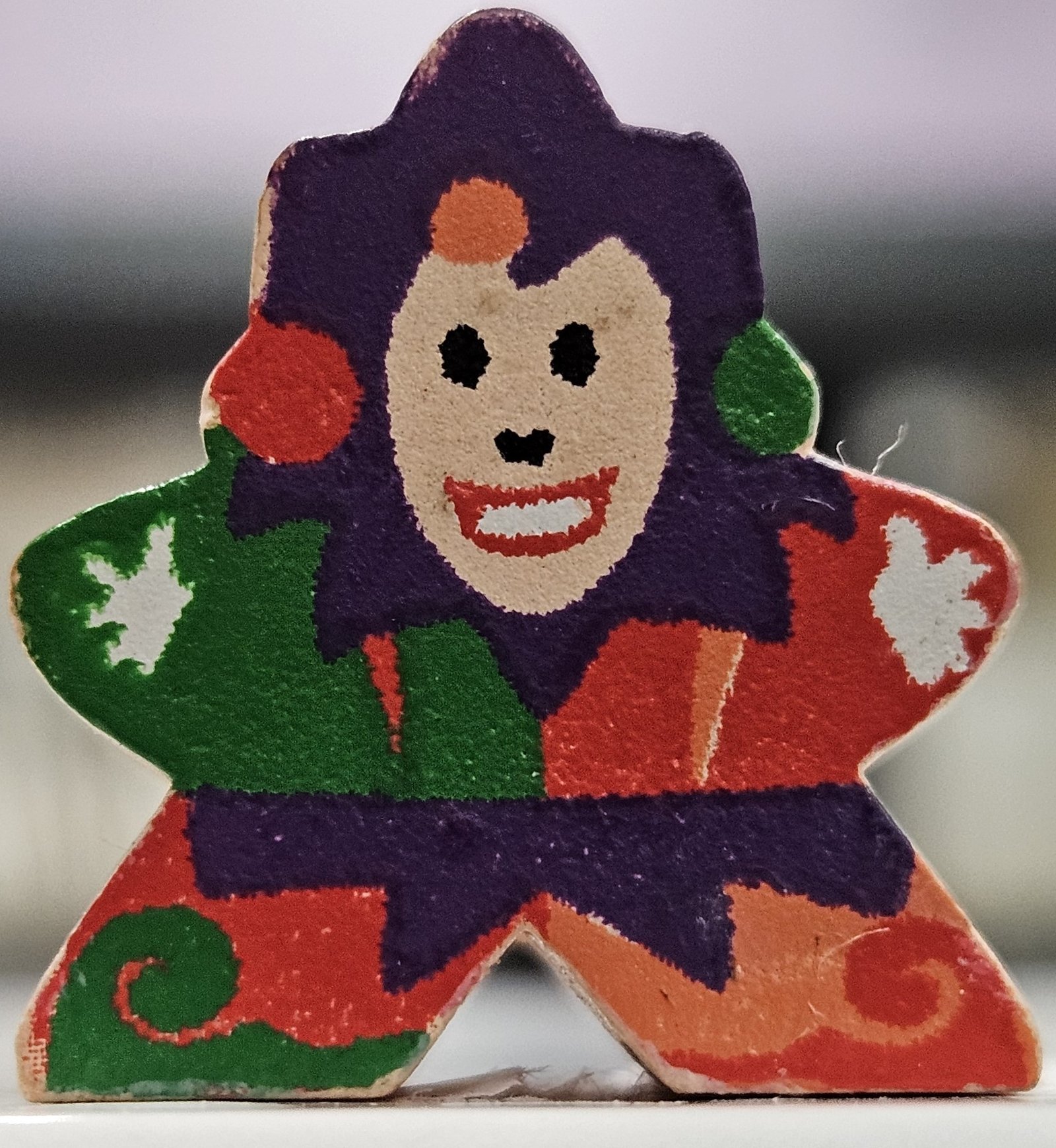

Why you should play
Setting-up Five Tribes is like spending a day as Elon Musk – you throw peasants into piles and gamble on which ones will get you filthy f*ck*ng rich. That’s probably a terrible comparison, but the game board does look like a fully exhumed meeple graveyard with every corpse in the classic meeple “spread-eagle” stance. So there’s that. In more meaningful terms, Five Tribes is a Mancala-style point salad abstract that slaps you upside the head for even thinking of the word “diagonally.” It’s a game that might teach you a thing or two about history, and DEFINITELY teaches you what the word “orthogonally” means.
But don’t let my cynicism fool you. This game is f*ck*ng dope as sh*t and should not be overlooked. Unless you want theme. If you want theme, then overlooking this wacko gem should be #1 on your to-do list. But if you love mechanics and a randomized board, then you should play Five Tribes. It’s a beast whose hook sinks in during set-up and never lets go.
The game board is 30 tiles set-up randomly in a 5×6 grid (There 5 different kinds of tiles among the 30). Three randomly chosen meeples are placed on each tile (There are 5 different colors of meeples). On your turn, you will choose a tile, pick up every meeple on that tile, and then drop them off, one at a time, in an orthogonal route of your choosing. The last meeple you drop triggers that meeple’s power AND you activate the tile you end on. So each turn you will get a MEEPLE POWER and a TILE POWER. Because you are dropping meeples onto other tiles, you are increasing multiple tile’s meeple amount (This means the board state is vastly different between turns, causing some serious AP). The goal is to combo meeple powers with tiles as best you can.
After you activate meeples on a tile, they will be removed permanently. If you clear out a tile, you get to place a camel of your color on it and claim it’s VP (One of many ways to score points). The game ends in two ways. If there are no legal meeple moves OR if someone has placed their eighth and final camel, the game ends.
Turn order is done with a bidding system – give up vp to go early to hopefully take a REALLY point-heavy-combotastic-turn. The various powers of meeples and tiles include gaining cards (Set collection), gaining djinn (Which will give you asymmetrical powers), gaining coins (Which are both VP and can be spent on bidding for turn order), assassinating meeples (Allowing you claim another tile), as well as other abilities as well. There are a whole bunch of ways to score in this game.
The opening board state is unadulterated Analysis Paralysis. In addition to gauging the sexiness of each randomized meeple pile and tile locations, the FIRST thing you must decide is maddening – how many victory points will you spend to go early in the round? Do you have any idea how confusing it is to gauge a “Good first turn” in Five Tribes?
It’s one of the only games where there are 1,000 legal moves and 97% of them are dumb as f*ck. So how much should you pay? How long should you look before you commit? You might spot a 15 victory point move and pay 8 victory points to claim it. Or pay 5 to get 10 vp only to have the next *sshole spend 8 and destroy everything you’ve ever loved. And worst of all, the last player might chop your jugular by paying 0 and get 20 more than you cause you stupidly made a pile of five meeples with two red assassins WHAT THE F*CK WERE YOU THINKING?!
Welcome to Five Tribes, where taking advantage of the previous moron is the name of the game. This is what the first turn feels like. Actually, this is what EVERY turn feels like. You want tough decisions? You want that glorious AP that defines all difficult board games? Then you will love this one. The hook of Five Tribes latches onto your spine and drags your overworked brain through the mud. It’s pretty intense.
After a few whirlwind rounds where you absolutely made embarrassingly horse-sh*t choices, the game quickly enters The Turn. Since each player’s meeple-dropping decisions vastly changes the board state, the obvious moves become less apparent. There are now strings of small meeple piles with a few meaty 6 meeple tiles and maybe a tile or two with only one meeple. The decision making becomes more complicated, as well as so much more delicious.
You’ve now developed a hankering for one (or more!) of the 5 meeple’s styles and seek to exploit the living sh*t out of it. You might have acquired 2 genies, their asymmetrical powers directing your decisions, or a TON of yellow meeples that you would gladly trample your own mother to defend. Or you’ve snagged all the sweet rare resources and have a mad set in front of you. At this point, you can still score some points with each type of meeple and tile, but your earlier turns have made sure that only a few will REALLY score you loads of VP. SO! Do you keep hemorrhaging coins in order to go first and activate the universally best spot, or do you save and pull off a move only you are interested in?
It is also at this point that the blood-thirsty assassin meeples really start to wreck sh*t if any tile has only one meeple standing on it – activate an assassin and that loner’s tile is yours to claim. That single-male-seeking-camel causes every person at the table to scour the board, looking for a way to blow him away and drop a camel on his corpse.
By the end of Five Tribes, there’s almost nothing left of Naqala. You’ve stolen the wealth of the builder (blue) meeples, the assassins (red) have slaughtered each other, the viziers (yellow) and elders (white) have all been gathered – or murdered! And what about those merchants (green) that allowed you to collect sets? They were the first to go! It’s just scraps; piles of 1, 2, or 3 dominate Naqala. The board looks so unappealing, is it even worth bidding for turn order anymore?
The Bite often occurs when several players have two or three camels left. Less than a third of the meeples remain on the board, leaving a dozen or so small moves obvious to everyone. The challenge swings from “What is the best move?” to “Should I bid at all?” The AP of deciding which move to perform gets bulldozed by the AP of deciding how many vp to bid. Bidding zero seems worth it since every option sucks and the world is garbage, but if a player drops their last camel before you act, you won’t even get another turn.
The Bite is admittedly the weakest point in Five Tribes, but that does not mean much in this 10 out of 10 game. The finale arrives suddenly and causes a complete U-Turn in thinking, making the end of Five Tribes anything but boring.





“Welcome to Five Tribes, where taking advantage of the previous moron is the name of the game.”
The best thing ever said about Five Tribes ever.